Furnace replacement is the strategic upgrade of removing an inefficient or failing heating unit and installing a modern, high-performance system. By investing in a new furnace, homeowners can significantly improve energy efficiency, lower monthly heating bills, and ensure consistent, quiet warmth throughout the home. Contact your local Bryant dealer to start to the process today.
Should I Repair or Replace My Furnace?
Deciding between repair and replacement often comes down to the $5,000 Rule.
What is the $5,000 Rule?
Multiply the age of your furnace (in years) by the estimated cost of the repair (in dollars). If the total exceeds $5,000, industry experts generally recommend replacement as the smarter long-term investment.
Additional signs it is time to replace:
- Age: Your furnace is over 15–20 years old.
- Cost: The repair bill is over $1,000 (especially for units 13+ years old).
- Performance: You notice rising energy bills, uneven heating, or strange noises.
Andrew Mackey, owner of Superior Service in Lake St. Louis, Missouri, stresses the importance of considering both the age and efficiency of a furnace when deciding whether to get a furnace repair or furnace replacement. He often shares a simple rule of thumb with customers:
“If the furnace is 15 years old or more and the repair is over $1,000, we usually advise that it makes the most sense to replace the unit,” Mackey said.
How to Choose the Right Replacement Furnace
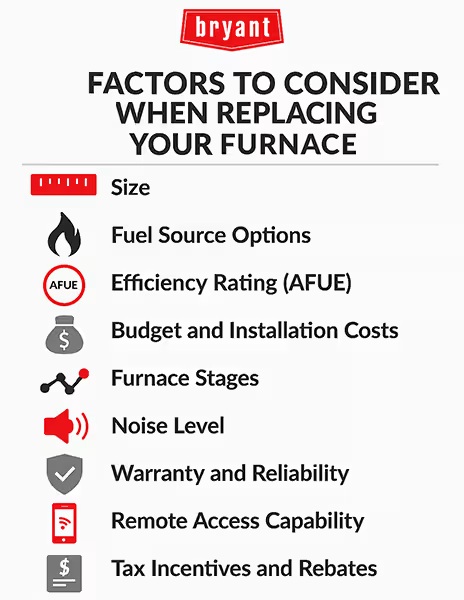
1. Proper Sizing and Capacity
- Too Big: The unit will short-cycle (turn on/off rapidly), wasting energy and wearing out parts.
- Too Small: The unit will struggle to keep up on the coldest days.
2. Fuel Source Options
- Natural gas furnace: The most popular choice for efficiency and affordability, where gas lines are available.
- Electric Furnace: Often easier to install and often cheaper upfront, but can have higher monthly operating costs depending on electricity rates. gas vs electric furnaces.
- Oil Furnaces: Oil furnaces can be a good option for homes in rural areas where natural gas lines aren’t available, but they require regular maintenance and have fluctuating fuel prices.
- Propane Furnaces: Propane furnaces are another option where natural gas is unavailable. They are typically more expensive than natural gas but offer better efficiency than electric or oil units.
3. Efficiency Rating (AFUE)
- Standard Efficiency: Typically around 80% AFUE.
- High Efficiency: 90% to 98.3% AFUE.
- Why it matters: A higher AFUE rating means less wasted fuel and lower monthly energy bills. While high efficiency furnaces cost more upfront, they often pay for themselves over time.
4. Comfort Technology (Furnace Stages_
Not all furnaces heat the same way. The “stage” of your furnace determines how precisely it controls temperature:
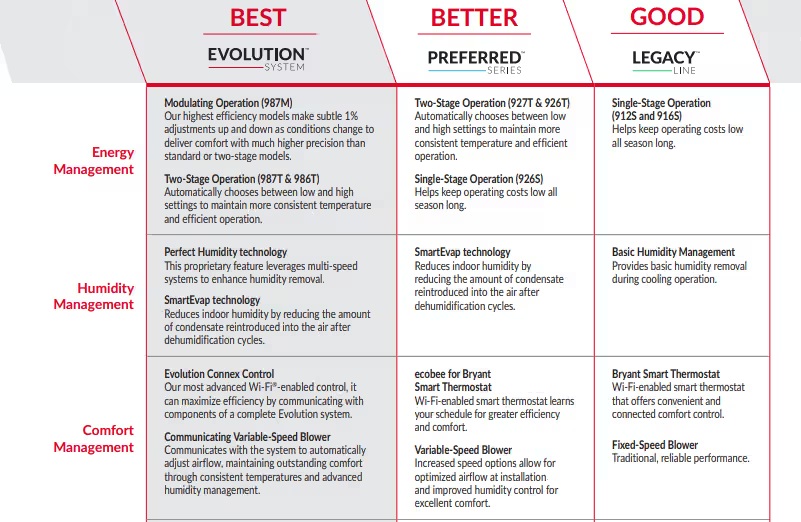
- Single-Stage: Operates at 100% capacity whenever it’s on. It’s affordable but can cause temperature swings.
- Two-Stage Furnace: Has a “low” and “high” setting. It runs on low most of the time for efficiency, kicking into high only when needed. Learn more about 2-stage furnaces.
- Modulating Furnace: The gold standard for comfort. It adjusts heat output in tiny increments (like a dimmer switch) to maintain a precise temperature with minimal energy use.
5. Noise Levels
Why Upgrade? The Benefits of a Modern System
- Lower Energy Bills: Modern standards are strict. Replacing an old 60-70% AFUE unit with a 95%+ model can drastically cut your heating costs.
- Consistent Comfort: Features like modulating burners eliminate the “blast of hot air followed by a cold draft” cycle common in older units.
- Smart Home Ready: Many new Bryant furnaces integrate seamlessly with smart thermostats, allowing you to control your climate from anywhere and optimize schedules for savings.
- Peace of Mind: New units come with robust warranties—often 5 to 10 years on furnace parts and even lifetime coverage on critical components like heat exchangers.
The Furnace Replacement Process
- Consultation: A local Bryant dealer visits your home to assess your current setup, insulation, and comfort needs.
- Selection: We help you choose the right model based on your budget, efficiency goals, and fuel availability.
- Installation: Professional technicians perform furnace installation to local codes, ensuring safety and peak performance.
- Testing: We rigorously test the system to ensure it runs quietly, efficiently, and safely before we leave.
Ready For For Furnace Replacement?
Service 1st Heating And Cooling
Unit 5 – 25 Struck Court
Cambridge, ON N1R 8L2
Call: 519-624-7651
Toll Free: 1-877-848-7651
Explore Bryant Furnaces
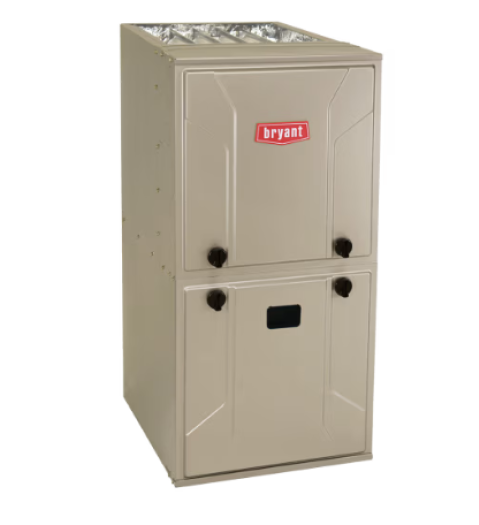
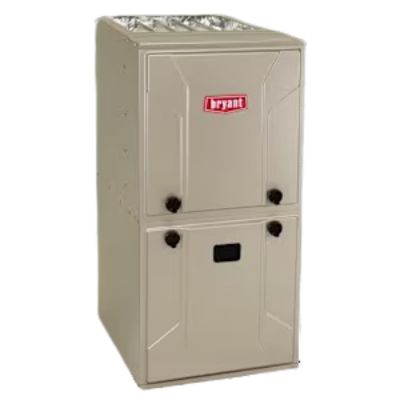
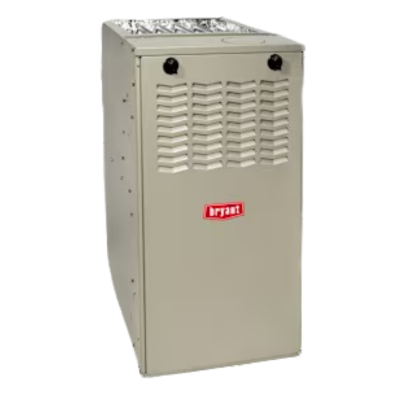
Choose a Bryant furnace for reliable, efficient heating that keeps your home comfortable throughout the winter. Known for their durability and advanced technology, Bryant furnaces offer quiet operation, precise temperature control, and energy-saving features like variable-speed motors and two-stage heating. With a range of models to suit different home sizes and needs, Bryant furnaces are built to last and come with industry-leading warranties, providing peace of mind and long-term value for your home heating system.
Furnace Replacement FAQs
About The Author: Travis Baugh is a Digital Brand Marketing Manager for Bryant, where he creates clear, helpful content to guide homeowners through heating, cooling, and indoor air quality decisions. His goal is to empower readers with the knowledge they need to choose the right comfort solutions for their home—confidently and comfortably.
Learn More About Furnaces
- Discover what is a heat pump vs furnace
- Explore what is a furnace
- Read our guide to furnace filters
- Learn about the importance of furnace cleaning
- Understand the ins and outs of a furnace tune-up
- Read about furnace inspections